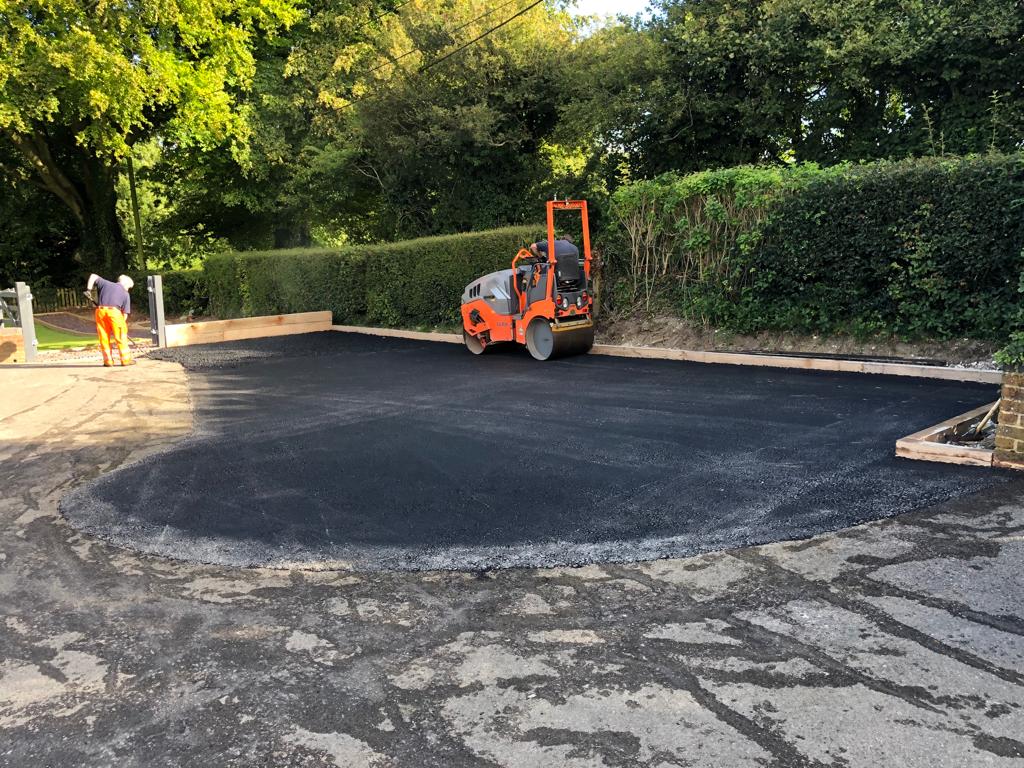
Large surfacing projects bring a different set of considerations from smaller driveways or access areas. The surface may need to cover a substantial area, accommodate regular vehicle movements, manage water effectively, and remain dependable under ongoing use. Choosing a surfacing method that suits these demands is therefore an important part of achieving a practical, long-lasting result.
Spray & seal bitumen is particularly well suited to many large-area applications. For property owners, businesses, and site operators in Byron Bay, NSW, it can provide a durable sealed surface for suitable roads, lengthy access routes, large driveways, and other expansive trafficable areas.
What Is Spray & Seal Bitumen?
Spray & seal is a pavement treatment created by applying a controlled layer of bituminous binder over a properly prepared base or existing pavement. Aggregate is spread over the binder and rolled into place, creating a textured wearing surface.
The result is different from asphalt, which consists of aggregate and bitumen mixed together before being laid and compacted. With spray & seal, the aggregate forms the visible wearing layer.
The effectiveness of the treatment depends on more than the bitumen and aggregate. Base preparation, grading, drainage, aggregate selection, application, and compaction all contribute to how well the completed surface performs.
Why Is Spray & Seal Well Suited to Larger Areas?
One of the strengths of spray & seal is its suitability for covering extensive trafficable areas without sacrificing the fundamental benefits of a sealed pavement.
Large unsealed areas can become difficult to manage. Loose material may move under traffic, dust can become an issue during dry periods, and wet conditions can contribute to mud, rutting, erosion, and inconsistent vehicle access.
Applying an appropriate spray & seal treatment creates a defined, sealed wearing surface that makes the area more practical for everyday use.
Reducing Dust and Loose Surface Material
Dust is a common concern on large gravel or unsealed areas. Repeated vehicle movements disturb fine particles, while loose aggregate can migrate away from frequently travelled sections.
Spray & seal binds the surface aggregate into the bituminous layer. This greatly reduces the amount of loose material compared with an unsealed surface and helps control dust generated by everyday traffic.
For a large driveway, access road, or operational area in Byron Bay, NSW, that can make the site noticeably cleaner and easier to use.
Providing More Dependable Wet-Weather Access
Large unsealed areas can change considerably when exposed to rainfall. Soft sections, mud, erosion, and rutting can make vehicle access inconsistent and may gradually alter the shape of the surface.
A correctly constructed spray & seal pavement provides a weather-resistant wearing layer. Vehicles travel on a sealed surface rather than directly over loose or exposed base material.
However, sealing alone does not solve drainage problems. The pavement still needs appropriate falls and water management so rainfall can move away instead of collecting in low areas.
Helping Protect the Pavement from Water
The bituminous binder used in spray sealing provides an important barrier against moisture entering from the surface.
This matters because water penetrating the pavement can weaken the base supporting the traffic above. Once that support deteriorates, depressions, cracking, potholes, and other forms of pavement failure can follow.
On a large surface, isolated drainage or moisture problems can eventually affect substantial sections of pavement. Good preparation combined with an effective seal helps protect the underlying structure.
A Practical Option for Long Access Roads
Long driveways and private access roads are applications where spray & seal can be particularly effective.
These surfaces need to provide reliable vehicle access over a considerable distance. Leaving them unsealed can mean ongoing issues with dust, loose gravel, corrugations, erosion, and potholes.
Where the underlying pavement is suitable, spray sealing creates a more consistent driving surface while protecting the prepared base beneath it.
The result is an access route that is easier to travel and better equipped for regular use.
Suitable for a Range of Large-Surface Applications
Spray & seal can be considered for a variety of larger areas, including:
- Long driveways
- Private roads
- Property access routes
- Commercial access areas
- Agricultural and operational roads
- Large trafficable areas
- Suitable existing sealed pavements requiring renewal
The right treatment depends on how the area will be used. Traffic frequency, vehicle weights, turning movements, existing pavement condition, drainage, and ground conditions should all be assessed before deciding whether spray & seal is appropriate.
It Can Help Preserve Existing Large Surfaces
Not every large pavement showing signs of age requires complete reconstruction.
If the underlying pavement remains structurally sound, a spray seal may be used as a preservation treatment. Renewing the wearing surface can help reduce water penetration and protect the existing pavement from continued environmental and traffic-related wear.
Timing is important. Spray sealing is most useful when the existing pavement is still suitable for treatment. It is not a substitute for repairing significant base failure, deep potholes, extensive deformation, or other structural problems.
A professional assessment helps establish what preparation is necessary before sealing.
Base Preparation Remains Essential
The size of a project does not make preparation less important. In fact, weaknesses across a large surface can become substantial maintenance problems if they are simply covered rather than corrected.
Before spray sealing, the surface may require grading, compaction, pothole repairs, correction of soft areas, or improvements to drainage.
A properly prepared base provides the structural support, while the spray seal acts primarily as the protective wearing surface. Understanding this relationship is essential when aiming for dependable long-term performance.
Professional Application Produces a More Reliable Result
Large spray & seal projects require consistent workmanship across the entire area. The bitumen needs to be applied appropriately, aggregate distribution must be controlled, and rolling needs to achieve effective embedment.
Professional contractors can also assess whether spray & seal is genuinely suitable for the intended traffic rather than recommending it simply because the area is large.
For projects in Byron Bay, NSW, matching the surfacing treatment to the site’s actual conditions is one of the most important steps towards achieving a reliable result.
Conclusion
Spray & seal bitumen can be an excellent choice for large surfaces because it creates a durable sealed wearing layer, reduces dust and loose material, improves all-weather accessibility, and helps protect the underlying pavement from moisture. It is particularly useful for suitable long driveways, access roads, private roads, and expansive trafficable areas.
Its long-term performance still depends on what lies underneath. Correct grading, drainage, base preparation, repairs, and professional application are essential for creating a surface capable of meeting the demands placed upon it.
For property owners and businesses in Byron Bay, NSW, Byron Bay Asphalt & Bitumen Surfacing can assess existing or proposed large surfaces and determine whether spray & seal is the appropriate treatment. If you are considering resurfacing a large access area or road, contact our team to discuss a solution suited to the condition and intended use of your site.
Call us on: 02 5121 9090
Click here to find out more about Byron Bay Asphalt & Bitumen Surfacing
Click here to complete our contact form and see how we can help with your Asphalt and Bitumen Surfacing needs.